
Most conversations about digital transformation focus on one thing: efficiency. Less paper. Faster approvals. Fewer people chasing documents that should already be findable in seconds.
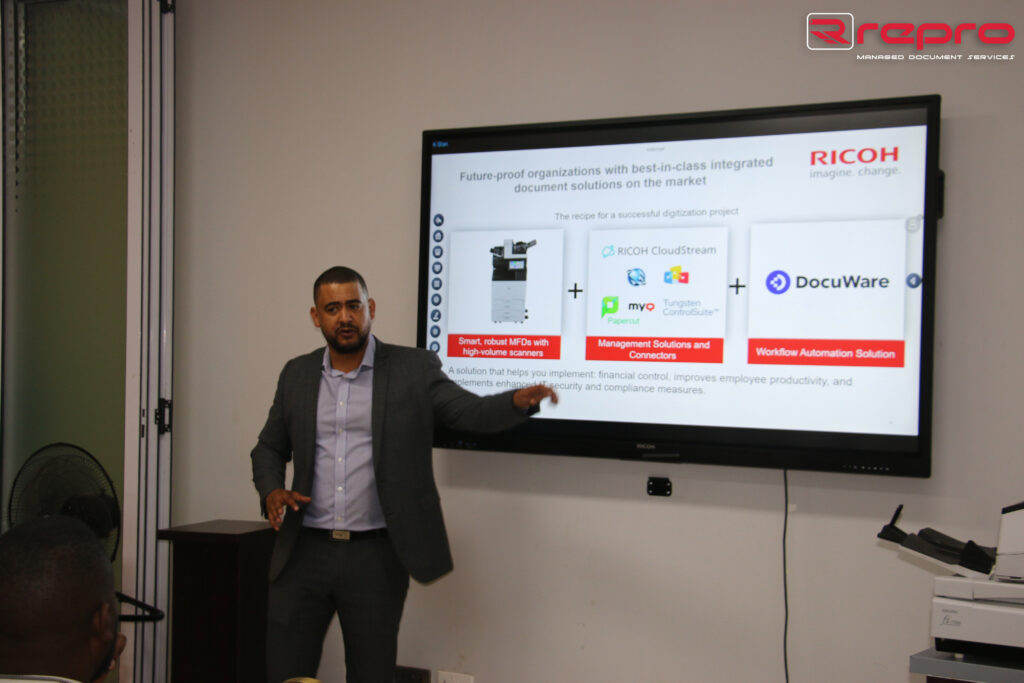
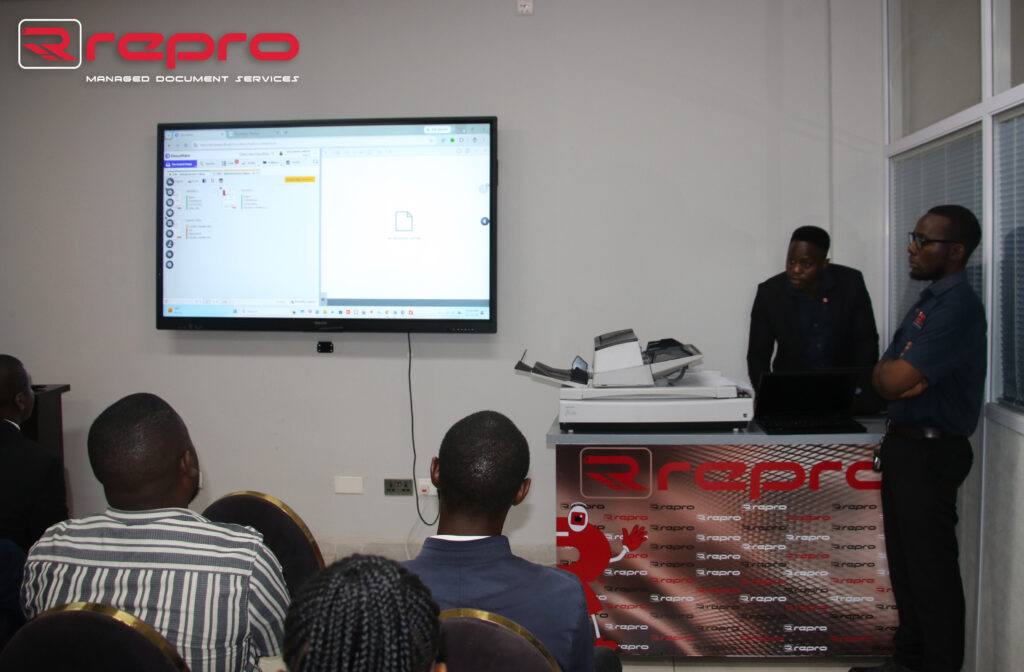
That is a fair goal, and it is worth pursuing. But it misses a harder question, one Repro put to a room of Zambian business leaders at a recent session in Lusaka.
Done badly, digital transformation does not reduce risk. It creates new versions of the same risk, often without anyone noticing until it is too late.
Are we solving old problems, or just moving them?
A hundred years ago, a business kept its records in filing cabinets. If a document went missing, everyone knew the cause: someone misfiled it, someone borrowed it and never returned it, or the cabinet itself was in the wrong office.
Today, many of those same businesses have scanned their filing cabinets into folders on a shared drive. The paper is gone. The problem often is not.
A scanned document sitting in an unrestricted folder is not more secure than the same document in a locked cabinet. It is, in some ways, less secure. A locked cabinet has one key, and someone knows who holds it. An unrestricted digital folder can be opened by anyone with access to the network, copied in seconds, forwarded without a trace, and never missed until it matters.
This is the uncomfortable truth behind most half-finished digital transformations. The paper disappeared. The structure that should have replaced it never arrived.
The risk hides in what looks like progress
It is easy to mistake activity for progress. A business that has scanned its archive, moved its approvals onto email, and started using cloud storage looks, on the surface, like it has modernised.
But three questions reveal whether that modernisation actually reduced risk or simply changed its shape.
Who can access this document, and why? If the answer is “everyone in the company” or “nobody has checked,” the digital version is not more controlled than the paper one ever was.
Is this the current version? A shared drive with fifteen copies of the same contract, each edited separately, is not a record. It is a guessing game with extra steps.
Can this be found in seconds, by the right person, when it actually matters? An audit, a legal dispute, or a regulator’s request does not wait for someone to remember which folder they saved something in three years ago.
If a business cannot answer all three questions confidently, digitisation has not yet delivered the safety it promised. It has simply moved the same vulnerability from a cabinet to a screen.
What a safe transformation actually requires
The businesses that get this right are not the ones that move fastest. They are the ones that build three things before they scan a single page.
Structure. Every document has a defined place, a defined type, and a defined owner. Retrieval is not a matter of memory. It is a matter of searching a system that was built to be searched.
Governance. Access is granted deliberately, not by default. Retention rules decide how long a record is kept and when it is safely removed, rather than everything accumulating indefinitely in a folder nobody manages.
Accountability. Every action on a document, who viewed it, who edited it, who approved it, is recorded automatically. When something goes wrong, or when an auditor asks a question, the answer already exists rather than needing to be reconstructed under pressure.
Technology alone does not create any of this. A scanner digitises paper. Cloud storage holds files. Neither one, on its own, builds structure, governance, or accountability. Those come from how the system around the technology is designed.
This is not a hypothetical risk
For a Zambian business, the consequences of getting this wrong are not abstract. A supplier that cannot produce a current compliance file during a vendor audit risk losing the contract, regardless of how good their actual work is. An organisation holding personal data in an unmanaged digital archive carries real exposure under the Data Protection Act. A finance team relying on scattered digital copies of approvals cannot reliably answer a straightforward question: who approved this, and when.
None of these are failures of technology. They are failures of the structure that should have surrounded it.
Where to start
The businesses in the room at Repro’s recent session were not asking whether to digitise. Most already have, at least partially. The real question they were asking was whether what they have built so far can actually be trusted.
That is the right question. The answer usually starts with a straightforward audit of what already exists: what is digitised, who can access it, whether it is current, and whether it can be found quickly under real pressure, not just in a calm moment.
Repro has spent thirty years helping Zambian organisations answer that question properly, moving them from scattered paper and unmanaged digital files toward governed systems that are secure by design, not by accident.
If you were not able to join the recent session and want to talk through what a safe digital transformation looks like for your organisation, we are happy to arrange a conversation.
Repro. Your Partner in Digital Transformation.